
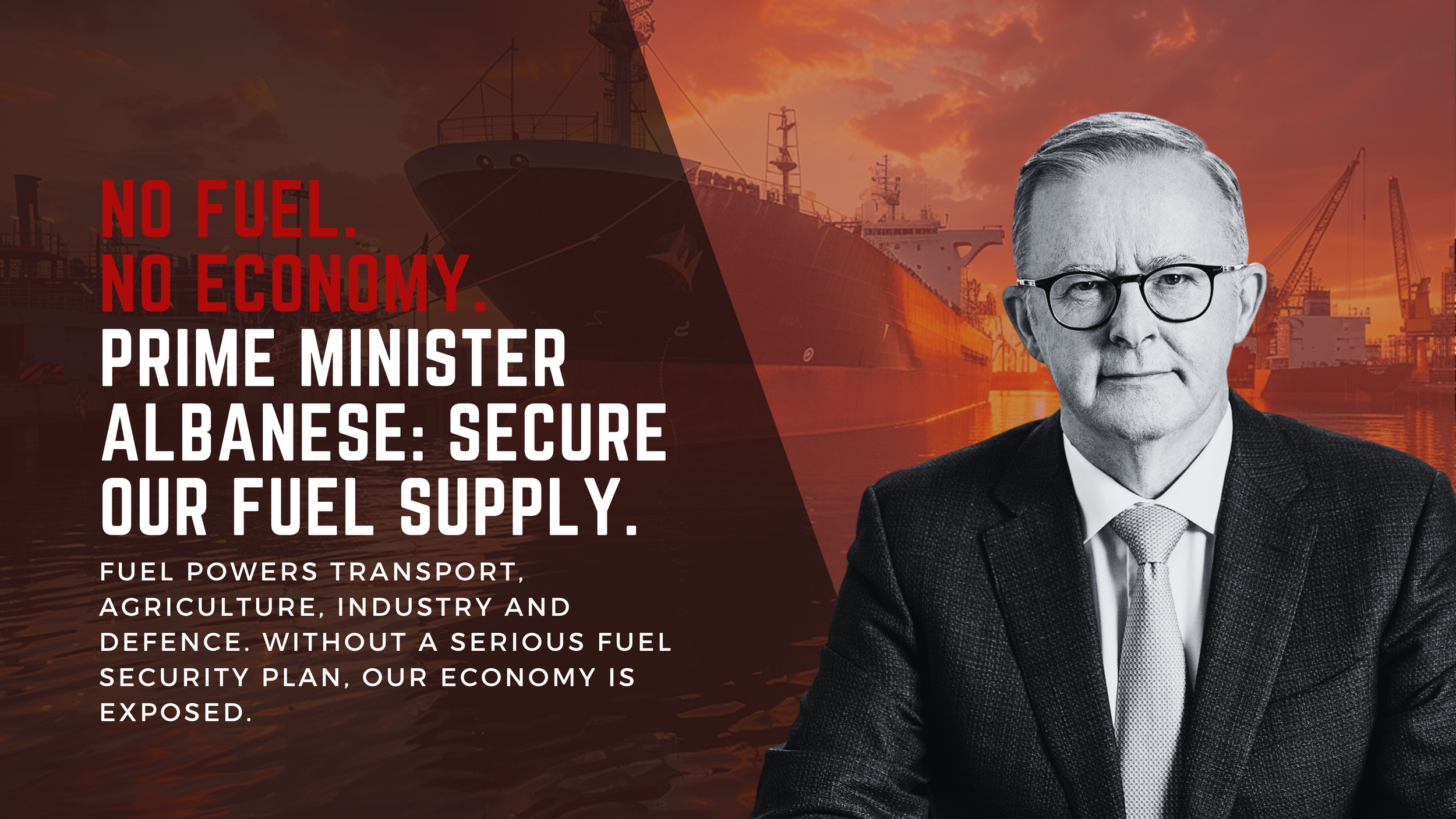
At a time of rising global instability, Australians are paying higher prices while our national fuel resilience weakens.
This is not sustainable.
Our country runs on fuel.
From farms and freight to aviation and everyday transport, it underpins almost every part of our economy and way of life. It keeps goods moving across vast distances, supports essential industries, and enables daily life to function.
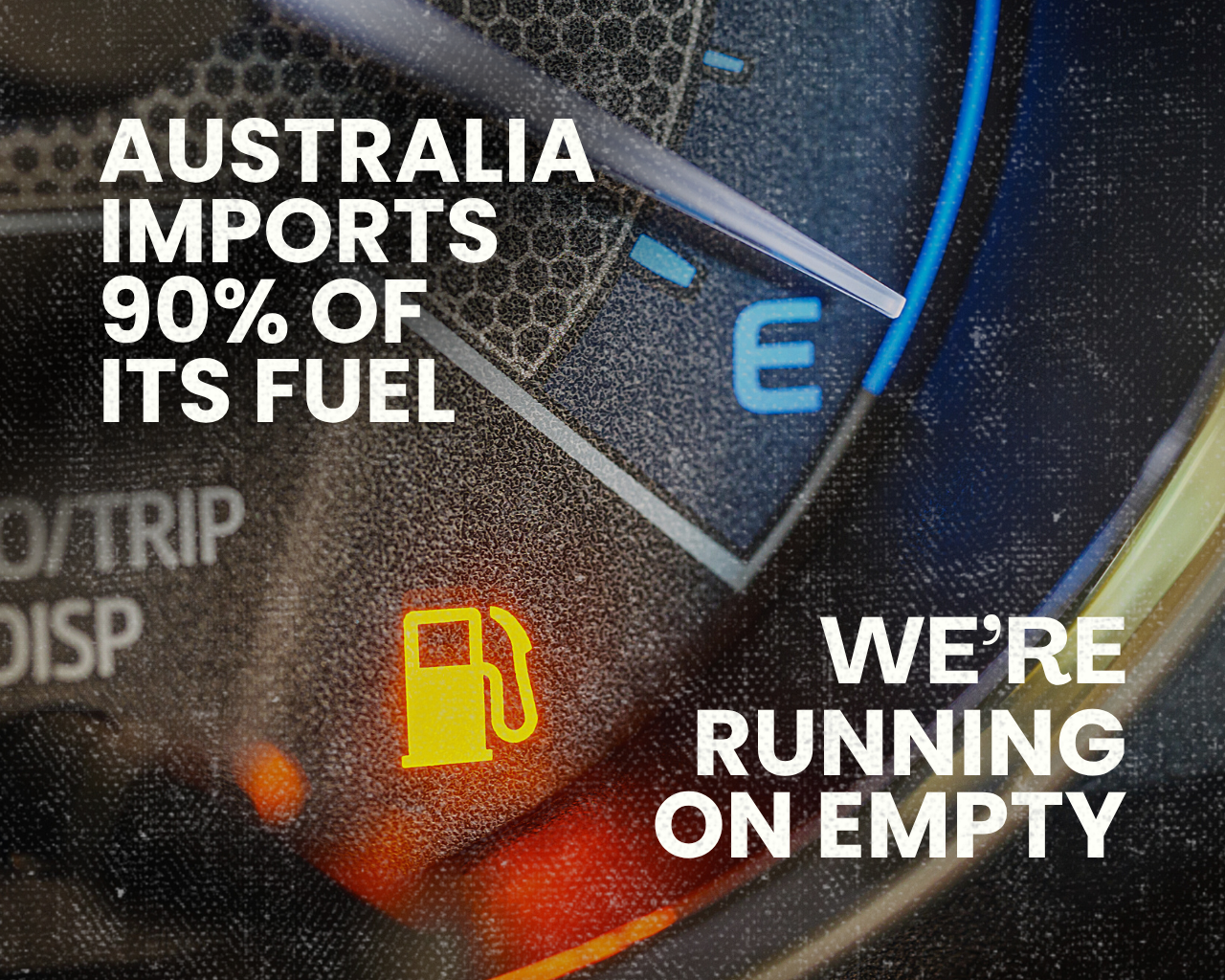
Yet despite its importance, Australia now imports the vast majority of its fuel — and holds significantly less in reserve than international standards recommend.
This leaves us exposed in ways most Australians rarely see, but would quickly feel.
Fuel is not just a cost at the bowser. It is a foundational input across the entire economy, shaping:
• food production
• freight and supply chains
• aviation and tourism
• emergency services
• household budgets
When fuel prices surge, the impact doesn’t stay contained — it flows through supply chains, raises business costs, and ultimately lands in the price of everyday goods and services.
At a time of growing global instability — economically, politically, and strategically — this level of dependence carries real risk.
Australia should be using this moment to strengthen its resilience and protect its economic stability — not drifting further into vulnerability.
-
We are too exposed: Australia relies on overseas fuel for the vast majority of its needs. If global supply is disrupted — whether through conflict, trade restrictions, or shipping constraints — Australia has limited ability to respond quickly. We are increasingly dependent on systems we do not control.
Supply disruptions would hit fast: Fuel shortages would not take months to materialise; they could emerge in a matter of weeks. With limited reserves and long supply chains, even a short disruption could impact transport, logistics, and essential services. The margin for error is thin.
Cost-of-Living pressures would intensify: Without intervention, Australians remain exposed to sharp and unpredictable price spikes. Fuel costs feed directly into groceries, utilities, construction, and small business operations. Continued volatility will place sustained pressure on household budgets.
Critical industries are at risk: Key sectors (including agriculture, freight, mining, and aviation) rely on consistent, affordable fuel. Disruptions or sustained high prices would reduce productivity, increase costs, and weaken Australia’s economic output at a time when resilience is most needed.
We are losing strategic capabilities: Australia’s ability to produce and refine its own fuel has declined significantly over time. Without action, this capability may be lost altogether, leaving the country permanently reliant on external suppliers, even during global crises.
Global events are becoming less predictable: Fuel security is increasingly shaped by geopolitical instability. Regional tensions, trade disputes, and supply chain disruptions are becoming more frequent. Australia is not insulated from these risks — we are directly exposed to them.
Emergency measures are not a long-term solution: Recent reliance on emergency reserves highlights how tight supply conditions already are. These measures are designed for short-term stabilisation — not ongoing support. Continued dependence on them signals a system under strain.
Future generations will bear the cost: Failure to act now does not eliminate the problem — it compounds it. Greater exposure, weaker capability, and higher long-term costs will ultimately be passed on to future Australians, both economically and strategically.
-
We call on the Australian Government to act immediately:
Temporarily suspend fuel excise during the current supply crisis: Australians currently pay 52.6 cents per litre in fuel excise. Temporary relief would immediately reduce cost pressures across the economy.
Suspend GST on fuel during the crisis: GST is applied after excise, meaning Australians pay tax on tax, during periods of supply shock, this additional burden should be removed.
Prioritise domestic fuel supply: Australia must ensure locally refined fuel serves domestic demand before export during supply instability.
Rebuild sovereign refining capacity: Australia once operated eight refineries. Today only two remain. A clear long-term plan is needed to restore and modernise domestic refining capability.
Establish domestic contingency fuel capability: Australia should rapidly develop locally derived fuel options to ensure supply resilience during global disruptions.
We are urging The Albanese Government to exercise fiscal responsibility.Tax relief now cannot become tax burden later.
If government revenue is reduced, government spending must be reduced accordingly.
Anything less simply shifts the cost onto future Australians through debt or higher taxation.
My Say Matters block goes here.
For further information or enquires visit www.standupnowaustralia.com.au